Software Freedom

Philosophy, Practice and Status
Perhaps the best way to talk about FOSS is as the software of the people, written by the people for other ordinary people.
Software Freedom has three levels, as an ideal, a set of practices and a legal status.
Philosophy
Today people talk about Apps, short for "applications". We used to call them computer "programs". Both are ways of talking about software, something that runs on your computer whether it's a phone, tablet, laptop or desktop.
As a way of thinking about the design [affordances] of computer software, we wonder;
What can you do with it? Can you move it from one device to another? Can you change how it works? Can you delete it? Or improve it? Can you share it, or the data inside it with someone else? Can you test that it is what you think it is? That it does what you think it should do?
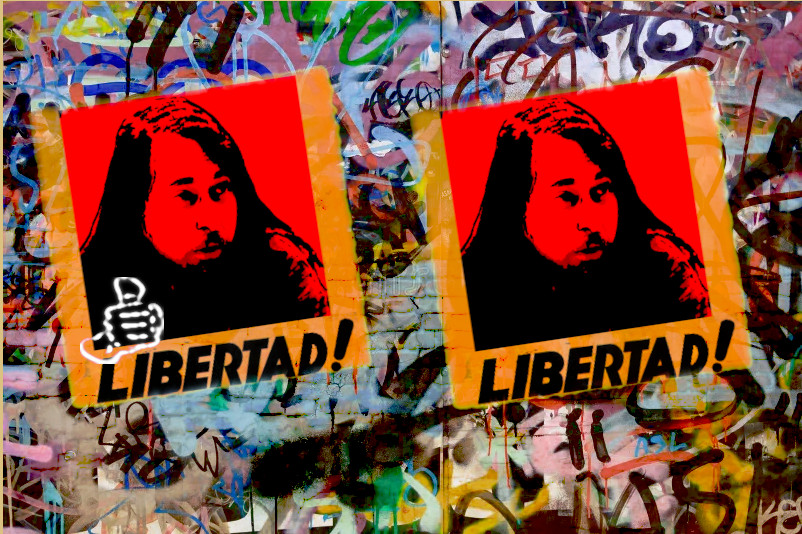
There are [Four Essential Freedoms], which are;
- to run the program as you wish for any purpose
- to study how the program works and change it so it does what you want
- to redistribute copies so you can help others
- to distribute copies of your modified version
If you have these you can, with the help of a trustworthy community, obtain all the other freedoms and security. This minimal set was proposed by philosopher and computer scientist Richard Stallman about 40 years ago.
Practice and culture
Computing is an idea, but perhaps more important than the philosophy is what ordinary people really do, as makers and users of software. How we form communities to share knowledge, test and improve on each other's work, it's what for thousands of years we've called "science". Real computer science is a culture, a web of practice that spans the globe in every language, is learned by children, and is passed on from one generation to the next.
Big Tech Corporations are really just a bunch of parasites that came along 50 years ago and started to tell everybody how they should do computing in order to make a pile of cash. What they actually made was a huge ugly mess of everything.
There is nothing special about the Windows operating system, in fact it is pretty poor quality product that achieved dominance only through very aggressive business practices. The main reason you use it as because you think everybody else does. Likewise for Google and Amazon products which are largely community free software taken and re-packaged in their own brand colours.
Regardless of the catastrophe that is Big Tech, regular folks continue with computing culture everywhere, in schools, in maker groups, in small startups and hack-spaces… everywhere a teenager can hold a soldering iron or type at a keyboard. This is the raw material, the intellectual engine of the digital age in which we now live. It's what academics like Ursula Franklin and Ivan Illich called holistic techne or convivial science. Things we share and improve together. Without it there would be no Microsoft, no Amazon, no Google. Bill Gates, Mark Zuckerberg and Jeff Bezos would be nothing without the technological culture they plundered to get rich.
Legal Contract
Most importantly this culture that sustains innovation and nourishes the digital infrastructure on which we've built the rest of modernity is guarded by the Rule Of Law. The law tries to protect the rights of citizens like you and me, to think and speak freely, not just with words but through the languages of mathematics and code. It protects our rights to invent and improve our lives, our homes and our communities.
Software Freedom is based on [contracts] that prevent big bullying companies telling you what you can download, share, modify, or tell you how to run your business or limit your life.
When you use democratic Free Software instead of Big Tech you join a massive global community of like-minded thinkers and contributors who create apps for the people, by the people. This software is yours.
Why we promote Free Software
As a cybersecurity company we strongly believe Software Freedom is the future, for digital sovereignty in Europe, and for personal liberty and privacy.
You can make it secure. You can make it as secure as you like, to protect your secrets, your list of suppliers and customers, your business ideas… all the things you deserve and have a right to keep private or share as you see fit.
Because you can understand and modify it, you have control and can limit or extend the functions of your applications to your own security needs.
At Boudica we believe the only credible path to cybersecurity is through Software Freedom, code which you can;
- audit
- examine and study
- understand
- modify to your needs
- seek community help
- share with partners and friends
It's why we'll help you build systems around GNU/Linux, BSD systems and other kinds of freedom respecting open source systems.
Why others promote Software Freedom
A changing world order means we can no longer rely on the stability and safety of software written by giant Amrican companies.
In Africa, in South America and now in Canada, Australia and Europe there's a huge shift away from Google, Microsoft and such companies, to exclusively using FOSS. All around the world people are teaching it in schools to try to move the next generation off dependency on Big Tech.
The European Commission is moving to fundamentally change how we understand and use software in Europe. With any luck Britain will also find the courage to free ourselves from old, abusive relationships.
Equivalence to security
Software Freedom is a cornerstone of computer security. Don't let anybody tell you otherwise. Freedom is security, and security is freedom. We learned this lesson the hard way between 1939 and 1945. Let's not repeat it again in this century.
There is no more fundamental maxim in cyber-security than this:
Trust but verify.
If you can't verify, all bets are off. If someone asks you to "just trust me" then… run away!! Access to auditable source code and the right to examine, test and fix it is a non-negotiable foundation. Without it you have absolutely no security, even in principle.
So-called "AI" and software from companies like Microsoft and software running on someone else's server isn't free, and so it isn't safe. Get as far away from it as possible!
There are many more reasons why, from a modern business perspective, Software Freedom is vital for security - not just technical information security but; psychological security, social security, financial security and many aspects of trust, resilience, self-determination and continuity of operations. Software Freedom puts you in control of your IT systems - which is something you are going to need more and more in the coming months and years.